
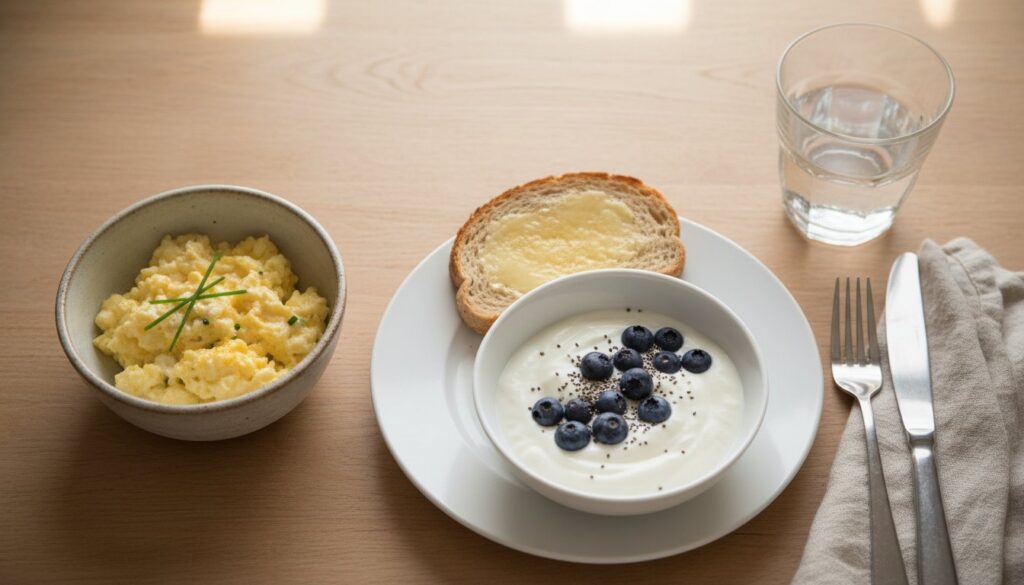
Why eating differently on GLP-1s matters
GLP-1 medications reduce hunger and slow digestion. That can help with cravings and portion control, but it can also make the stomach feel overly full after only a few bites.
Skipping meals may seem harmless when appetite is low, but going too long without food can worsen nausea, increase fatigue, and make it harder to get enough protein. Over time, very low intake can also increase the risk of losing lean muscle along with body fat.
Muscle matters during weight loss. It supports strength, balance, glucose control, metabolism, and long-term weight maintenance. A strong GLP-1 eating plan protects muscle while still allowing a calorie deficit.
The best approach is simple:
- Eat smaller meals more often.
- Prioritize protein early in the day.
- Choose foods that are soft, moist, and easy to digest.
- Drink steadily between meals.
- Increase fiber gradually.
- Keep strength training in the plan to maintain / build muscle mass.
Build every meal around protein first
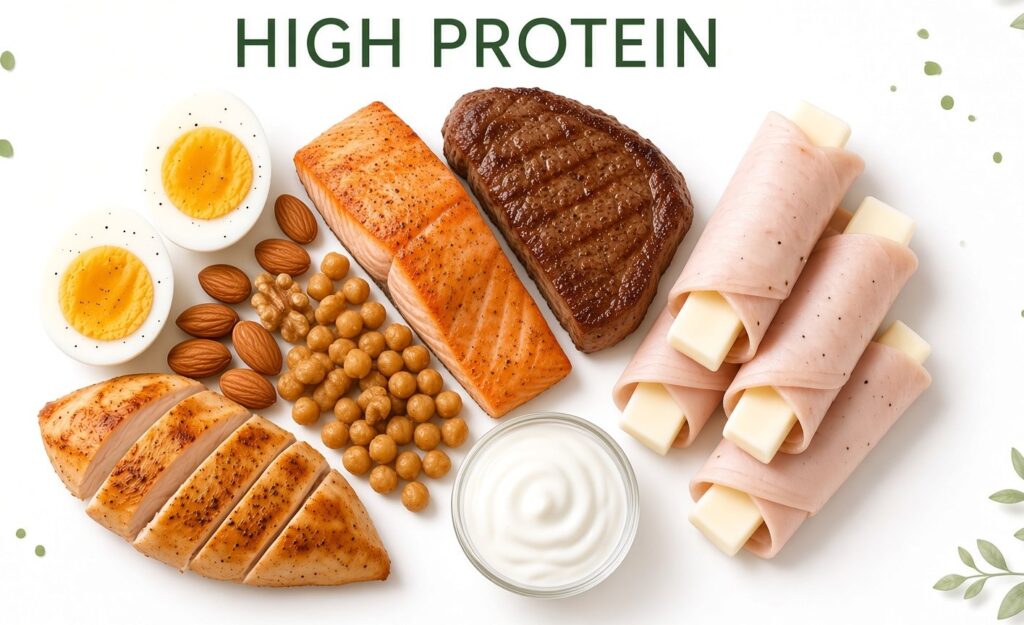
Eat protein first.
When portions are small, protein needs to come first. If protein is left until the end of the meal, it may not get eaten.
Many adults losing weight do well with a protein target. A common range used in weight-loss nutrition is about 1.2 to 1.6 grams of protein per kilogram of body weight per day, but needs vary. People with kidney disease or other medical conditions should get individual guidance.
A practical target for many meals is 20 to 35 grams of protein for most women, depending on body size, tolerance, and total daily intake.
Gentle high-protein foods that are easy on the stomach
Choose moist, tender foods instead of dry or greasy options. Warm, soft textures often go down better than dense foods.
| Food | Why it helps | Easy serving idea |
|---|---|---|
| Plain Greek yogurt | High in protein and soft | Add berries or a drizzle of honey |
| Cottage cheese | Protein-rich and mild | Pair with peaches or cucumber |
| Eggs | Easy to portion and digest for many people | Try soft scrambled or boiled eggs |
| Tofu | Soft, mild, and versatile | Add to soup or rice bowls |
| Chicken breast or thighs | Lean protein when cooked tender | Shred into broth, soup, or wraps |
| White fish | Light texture and mild flavour | Bake with lemon and herbs |
| Turkey meatballs | Soft if cooked in sauce | Serve with soft vegetables |
| Protein smoothies | Useful when chewing feels hard | Blend milk, yogurt, fruit, and protein powder |
| Lentil soup | Protein plus fiber | Start with a small bowl |
| Juicy tender steak or beef stew | Easy to chew | Serve with cauli-mash or baked sweet potatoe |
If meat feels heavy, try softer options for a while. Greek yogurt, eggs, tofu, fish, cottage cheese, and smoothies can help fill the gap.
Protein powders can help, but keep them simple
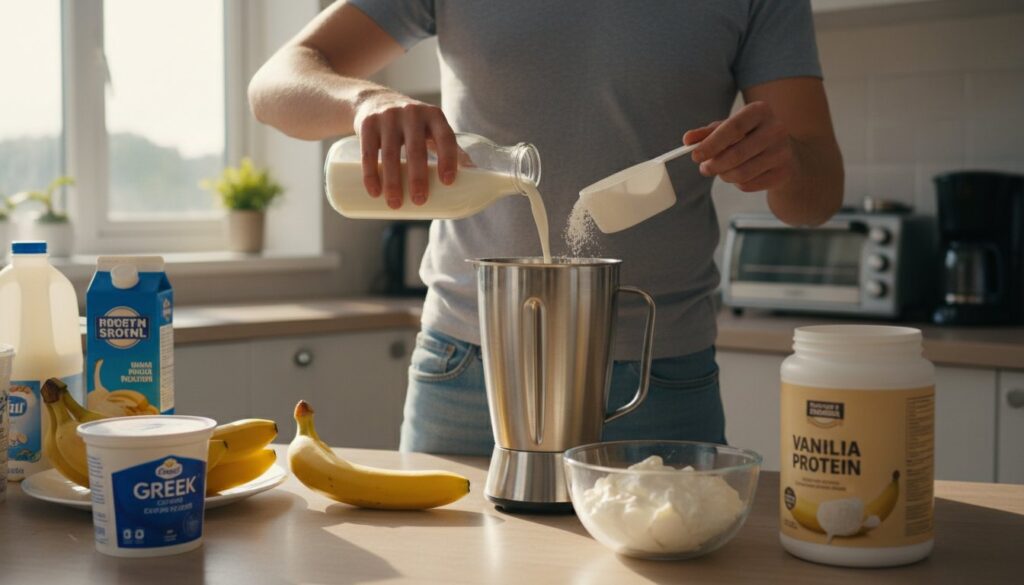
Protein powder can be useful when appetite is low. Whey, casein, soy, pea, or blended plant proteins can all work.
Look for a powder that has:
- Around 20 to 30 grams of protein per serving
- Minimal added sugar
- A flavour you can tolerate
- No ingredients that trigger bloating for you
Start with half a scoop. A full, thick shake may be too much if nausea is active.
Use meal timing to reduce nausea
Nausea often gets worse when the stomach is either too empty or too full. A steady rhythm helps.
Instead of three large meals, try four to six mini-meals. Each one can be small, but protein should still appear several times per day.
A sample day might look like this:
| Time | Gentle option |
|---|---|
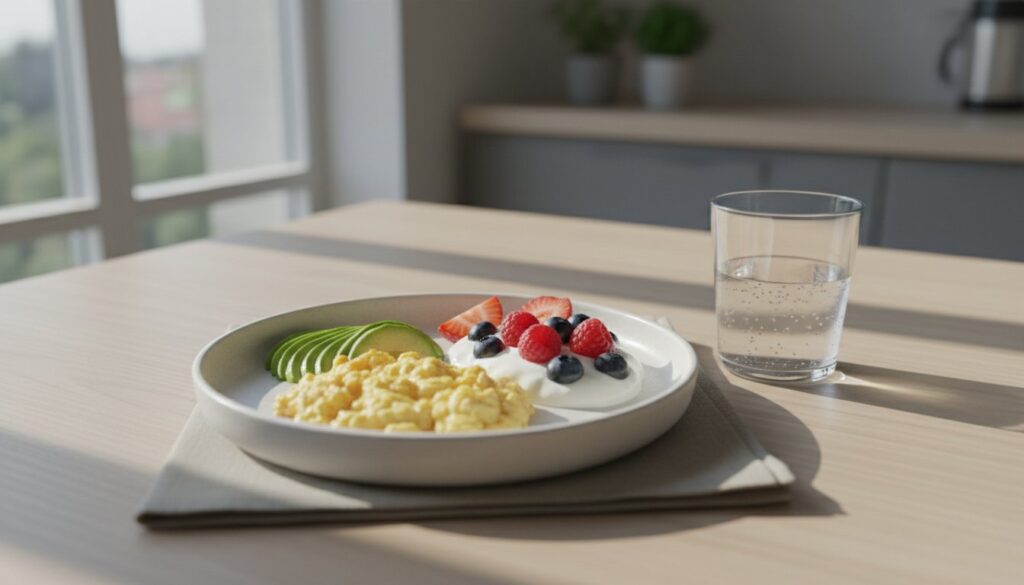
| 7:30 a.m. | Greek yogurt with berries |
| 10:30 a.m. | Half a protein smoothie |
| 1:00 p.m. | Chicken vegetable soup |
| 4:00 p.m. | Cottage cheese with crackers |
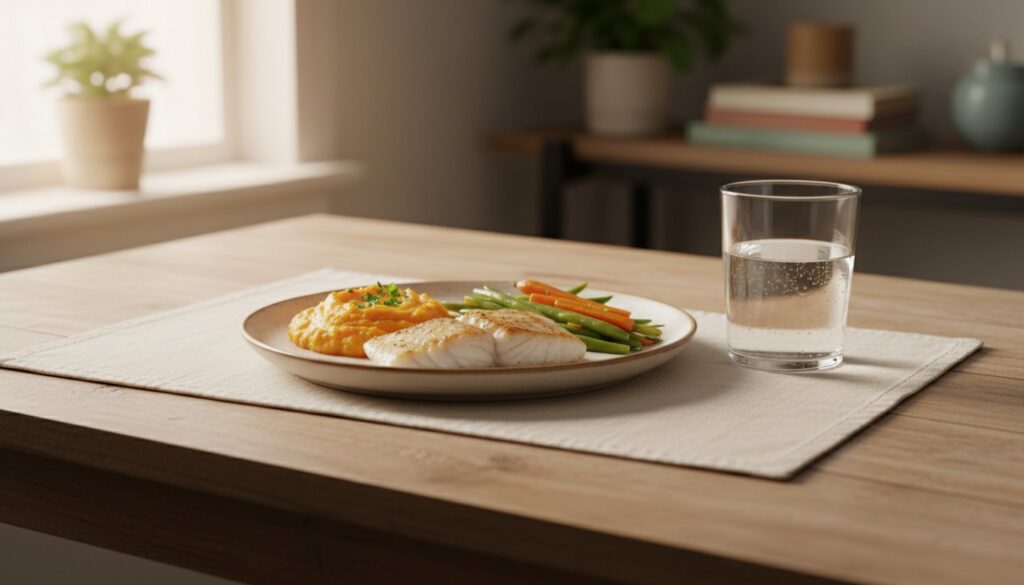
| 6:30 p.m. | Fish, mashed sweet potato, and cooked carrots |
| 8:30 p.m. | Ginger tea or a few bites of yogurt if needed |
Some people feel better eating the most protein earlier in the day. Others tolerate food better later. Track patterns for one or two weeks and adjust.
Around injection day
Side effects are often stronger in the day or two after a dose change or injection. During that window, keep meals extra simple.
Good choices include:
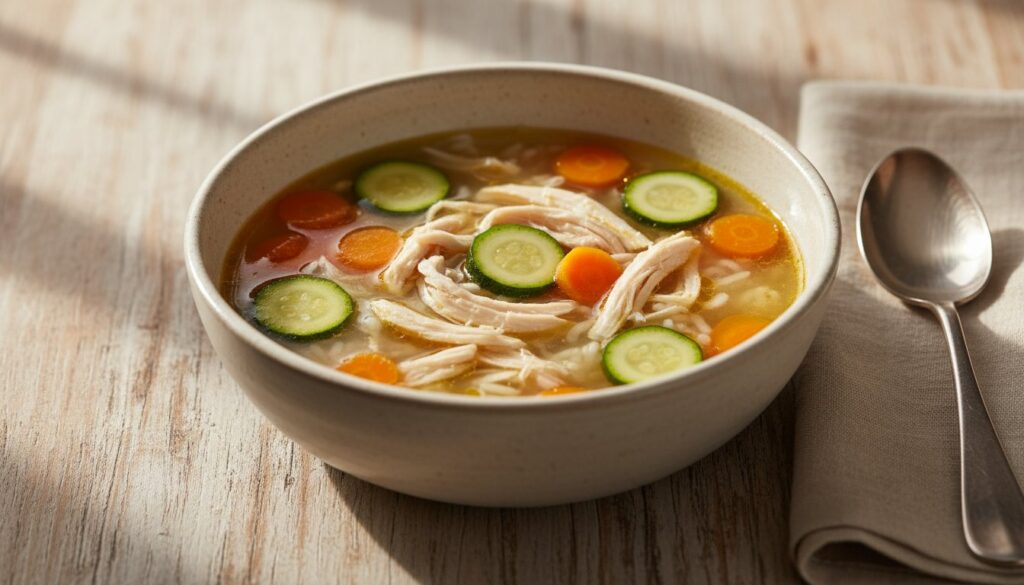
- Soup with shredded chicken or tofu
- Scrambled eggs
- Greek yogurt
- Applesauce with cottage cheese
- Rice with soft fish
- Toast with egg
- Smoothies made thinner with milk or water
- Oatmeal with protein powder stirred in after cooking
Try to avoid experimenting with rich restaurant meals, alcohol, fried foods, or large portions right around injection day.
Calm nausea with simple food and drink choices
Nausea on GLP-1s is common, especially during dose increases. It is often manageable with smaller portions and lower-fat meals.
Start by eating slowly. Put the fork down between bites. Stop when comfortably satisfied, not when full. Since the medication slows digestion, fullness can arrive late and then feel intense.
Foods that tend to be gentler
These foods are not magic cures, but many people tolerate them well:
- Bananas
- Applesauce
- Plain toast
- Crackers
- Rice
- Oatmeal
- Broth-based soups
- Boiled or baked potatoes
- Cooked carrots
- Zucchini
- Soft eggs
- Yogurt
- Cottage cheese
- Ginger tea
- Peppermint tea
Pair stomach-settling carbohydrates with protein when possible. For example, toast is easier to make into a muscle-supporting meal when paired with egg, cottage cheese, or Greek yogurt.
Foods that often worsen nausea
Common triggers include:
- Fried foods
- Creamy sauces
- Large portions of red meat
- High-fat takeout
- Very spicy meals
- Carbonated drinks
- Alcohol
- Large salads
- Heavy desserts
- Eating too quickly
- Lying down right after eating
Raw vegetables and big salads are healthy, but they can feel rough on a slowed stomach. Cooked vegetables are often easier. Try soups, roasted carrots, steamed zucchini, squash, or well-cooked green beans.
Ginger can help some people
Ginger tea, ginger chews, or capsules may ease mild nausea for some. If you take blood thinners, have gallbladder disease, are pregnant, or have a medical condition, ask a clinician before using ginger supplements.
Peppermint tea can feel soothing too, though it may worsen reflux in some people.
Hydration is a side-effect strategy, not an afterthought
Low appetite can lead to low fluid intake. That can worsen constipation, headaches, fatigue, dizziness, and nausea.
Aim to sip fluids across the day rather than chugging large amounts with meals. Too much liquid during meals may increase fullness and make protein harder to finish.
Good options include:
- Water
- Electrolyte drinks with little or no sugar
- Herbal tea
- Broth
- Milk or fortified soy milk
- Diluted juice if needed
- Water with lemon, cucumber, or berries
A simple rhythm works well. Keep a bottle nearby and take a few sips every 10 to 15 minutes. If plain water feels unpleasant, try it cold, warm, flavoured, or with electrolytes.
Consider electrolytes when intake is low
Electrolytes may help if eating less has reduced sodium and fluid intake, especially with sweating, exercise, or vomiting. Choose options that fit your medical needs. People with high blood pressure, kidney disease, or heart conditions should ask before increasing sodium.
Protect muscle while losing weight
Weight loss without strength work and protein can lead to more muscle loss than necessary. GLP-1s make this easier to overlook because hunger is low.
Eat protein in several doses
One large serving at dinner is less useful than spreading protein through the day. Try to include protein at breakfast, lunch, dinner, and one snack if possible.
Examples:
- Greek yogurt at breakfast
- Chicken soup at lunch
- Cottage cheese in the afternoon
- Fish or tofu at dinner
Strength train two to four times per week
Strength training signals the body to keep muscle. It does not need to be complicated.
Useful options include:
- Squats to a chair
- Wall pushups
- Resistance band rows
- Step-ups
- Hip bridges
- Light dumbbell exercises
Start where you are. Even 20 minutes, twice weekly, can build the habit. If you are new to exercise or have health concerns, get clearance first.
GLP-1s can be a helpful tool, but food habits protect the results. Gentle high-protein meals, smart hydration, small portions, and strength training make the experience easier on the stomach and better for long-term health.
For personalized support, book a free call to have a customized plan to stay nourished during your weight loss journey!